
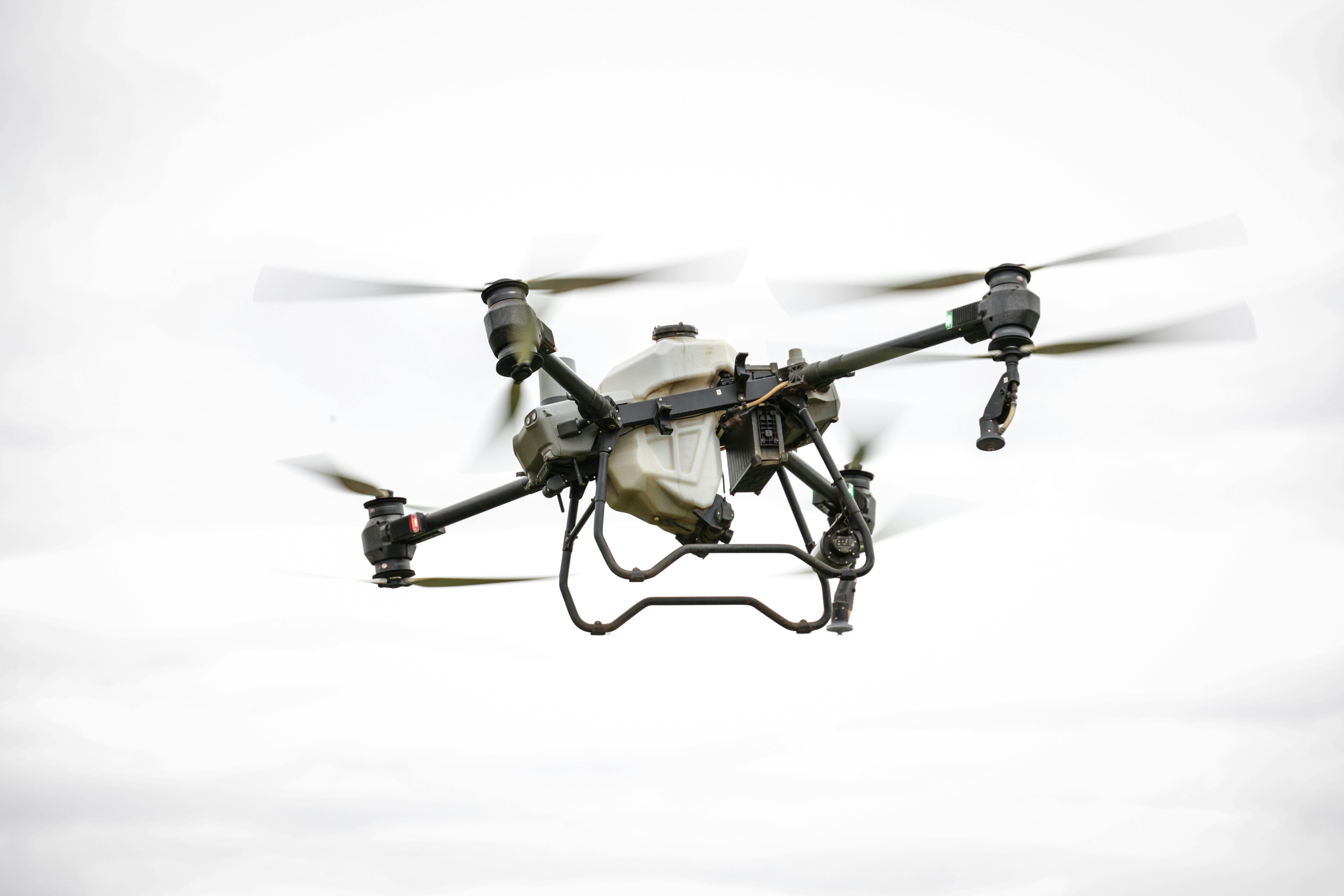
Drone technology is revolutionizing how professionals collect ground-truth data, offering unprecedented accuracy, efficiency, and coverage for surveys across multiple industries worldwide.

🚁 The Revolution Taking Flight in Survey Methodology
Traditional ground-truth surveys have long been the backbone of geographical, environmental, and construction data collection. However, these conventional methods often involve significant time investments, labor costs, and physical challenges. Drones, or unmanned aerial vehicles (UAVs), have emerged as transformative tools that enhance the precision and scope of these surveys while dramatically reducing operational constraints.
The integration of drone technology into ground-truth surveying represents more than just a technological upgrade—it signifies a fundamental shift in how professionals approach data collection. From agricultural field assessments to urban planning initiatives, drones provide a bird’s-eye perspective that was previously accessible only through expensive manned aircraft or satellite imagery with limited resolution.
Understanding Ground-Truth Surveys in the Modern Context
Ground-truth surveys serve as the foundation for validating remote sensing data, creating baseline measurements, and ensuring accuracy in geospatial analyses. These surveys traditionally required teams of specialists to physically visit sites, take measurements, collect samples, and document observations—a process that could span weeks or months depending on terrain difficulty and project scope.
The challenges inherent in traditional ground-truthing include accessibility issues in remote or hazardous locations, weather dependencies, human error in measurements, and the limited spatial coverage achievable within practical timeframes. These limitations often resulted in data gaps, delayed project timelines, and increased budgets that made comprehensive surveys prohibitively expensive for many organizations.
The Data Quality Imperative
Accurate ground-truth data forms the cornerstone of decision-making processes across numerous sectors. In agriculture, precise field data informs crop management strategies and yield predictions. Environmental scientists rely on accurate measurements to monitor ecosystem health and climate change impacts. Urban planners need detailed topographical information to design infrastructure that serves communities effectively.
Without reliable ground-truth information, models fail, predictions become unreliable, and resource allocation suffers. The stakes are particularly high in disaster response scenarios, where accurate terrain data can mean the difference between effective relief operations and tragic delays.
How Drone Technology Transforms Data Collection 📊
Drones equipped with advanced sensors and cameras can capture high-resolution imagery, multispectral data, thermal information, and LiDAR point clouds—all while covering extensive areas in fractions of the time required by ground teams. This capability fundamentally changes the economics and logistics of comprehensive surveying.
Modern survey drones feature GPS-guided flight patterns that ensure systematic coverage and precise georeferencing. Automated flight planning software allows operators to define survey parameters, and the drone executes the mission with minimal human intervention, maintaining consistent altitude and overlap percentages critical for photogrammetric processing.
Sensor Technologies Driving Precision
The sensor payload determines the type and quality of data collected during drone surveys. RGB cameras provide high-resolution visual documentation suitable for creating orthomosaics and 3D models. Multispectral and hyperspectral sensors capture data beyond visible wavelengths, revealing vegetation health indices, soil moisture patterns, and mineral compositions invisible to the naked eye.
LiDAR-equipped drones penetrate vegetation canopies to map ground surface elevations with centimeter-level accuracy, proving invaluable for forestry applications, flood modeling, and archaeological site documentation. Thermal sensors detect temperature variations useful in building inspections, wildlife surveys, and agricultural stress detection.
Practical Applications Across Industries 🏗️
The versatility of drone-based ground-truth surveys has led to adoption across diverse professional fields, each benefiting from the technology’s unique advantages.
Agriculture and Precision Farming
Agricultural professionals use drones to monitor crop health, assess irrigation efficiency, and identify pest infestations early. Multispectral imagery reveals stress indicators days or weeks before visible symptoms appear, allowing targeted interventions that reduce chemical inputs while maximizing yields.
Farmers can generate prescription maps for variable-rate applications of fertilizers and pesticides, applying resources only where needed rather than uniformly across entire fields. This precision reduces costs and environmental impact while improving productivity—a true win-win outcome enabled by accurate aerial data collection.
Environmental Monitoring and Conservation
Conservation organizations deploy drones to survey wildlife populations, monitor habitat changes, and detect illegal activities like poaching or logging. The non-invasive nature of aerial surveys minimizes disturbance to sensitive ecosystems while providing comprehensive coverage impossible through ground patrols alone.
Coastal erosion studies, wetland mapping, and forest health assessments all benefit from regular drone surveys that document changes over time. The resulting temporal datasets enable researchers to identify trends, model future scenarios, and advocate for evidence-based conservation policies.
Construction and Infrastructure Development
Construction firms utilize drones for site surveys, progress monitoring, and volumetric calculations. Regular aerial documentation creates visual records that help identify deviations from plans, facilitate communication among stakeholders, and provide documentation for dispute resolution.
Stockpile volume measurements that once required days of manual surveying now take minutes with drone photogrammetry, delivering accuracy within one to two percent while eliminating safety risks associated with climbing unstable materials. Infrastructure inspections of bridges, power lines, and pipelines benefit similarly from drone accessibility and detailed imaging capabilities.
Workflow Integration: From Flight to Actionable Insights ✈️
Effective drone surveying extends beyond flying the aircraft—it encompasses mission planning, data capture, processing, analysis, and integration with existing workflows and information systems.
Mission Planning and Execution
Successful surveys begin with careful planning that considers project objectives, required data resolution, site characteristics, and regulatory compliance. Flight planning software helps operators calculate optimal flight altitude, camera settings, and overlap percentages to ensure complete coverage and data quality.
Weather conditions significantly impact data quality, with ideal conditions being overcast skies that provide even lighting without harsh shadows. Wind speeds must remain within aircraft specifications, and precipitation obviously prevents most survey operations. Experienced operators monitor conditions and schedule flights accordingly.
Data Processing and Analysis
Raw imagery from drone surveys requires processing through photogrammetry or LiDAR software to generate usable products like orthomosaics, digital elevation models, and 3D meshes. This processing computationally intensive but increasingly automated, with cloud-based services offering streamlined workflows.
Processing parameters affect output quality and must be tuned based on terrain characteristics and intended applications. Ground control points—physical markers with precisely surveyed coordinates—enhance geometric accuracy and should be distributed throughout the survey area when highest precision is required.
Achieving Survey-Grade Accuracy with RTK and PPK 🎯
While consumer drones achieve positioning accuracies of several meters using standard GPS, professional survey applications demand centimeter-level precision. Real-Time Kinematic (RTK) and Post-Processed Kinematic (PPK) technologies deliver this enhanced accuracy through differential GNSS corrections.
RTK systems receive correction signals from base stations during flight, instantly improving positional accuracy. PPK systems record raw satellite observations that are corrected during post-processing, offering similar accuracy with greater operational flexibility since real-time communication with base stations isn’t required.
These technologies reduce or eliminate the need for traditional ground control points, dramatically decreasing field time while maintaining survey-grade accuracy. The combination of RTK/PPK-equipped drones and proper processing workflows produces datasets comparable to traditional terrestrial surveys at a fraction of the cost.
Overcoming Challenges and Limitations ⚠️
Despite their numerous advantages, drone surveys face certain limitations and challenges that practitioners must understand and address.
Regulatory Compliance and Airspace Access
Drone operations are subject to aviation regulations that vary by country and region. Most jurisdictions require operator certification, aircraft registration, and adherence to operational rules regarding altitude limits, distance from people, and flight over populated areas.
Obtaining authorization to fly in controlled airspace near airports or over certain restricted areas can be time-consuming or impossible. Operators must build regulatory compliance into project planning, allowing sufficient time for permit applications and maintaining current knowledge of evolving regulations.
Environmental and Technical Constraints
Battery life limits flight duration to typically 20-40 minutes, constraining coverage area per flight. Large projects require multiple flights with battery changes, adding operational time. Weather sensitivity means surveys may be delayed by wind, rain, or poor lighting conditions.
Dense vegetation canopy presents challenges for mapping ground surface, though LiDAR partially addresses this limitation. Vertical surfaces like building facades require specialized flight planning to capture adequate imagery from appropriate angles.
The Economic Case: Cost-Benefit Analysis 💰
Organizations considering drone integration for ground-truth surveys must evaluate costs against benefits within their specific operational context.
Initial investments include aircraft purchase, sensor equipment, processing software licenses, operator training, and regulatory compliance. These costs range from a few thousand dollars for basic setups to tens of thousands for professional survey-grade systems.
The return on investment emerges through reduced field time, decreased personnel requirements, improved data quality, faster project turnaround, and enhanced safety. Projects that previously required weeks of fieldwork may be completed in days. Dangerous inspections are conducted remotely, eliminating injury risks.
For organizations conducting regular surveys or managing extensive properties, in-house drone capabilities typically achieve payback within the first year. Smaller organizations may benefit from engaging specialized service providers who absorb equipment and training costs while offering expertise and proven workflows.
Future Trajectories in Drone Survey Technology 🔮
Ongoing technological advancement promises even greater capabilities and accessibility for drone-based ground-truth surveys.
Artificial Intelligence and Automated Analysis
Machine learning algorithms increasingly automate data analysis, automatically identifying features, detecting changes, and extracting measurements from imagery. AI-powered systems can classify vegetation types, count objects, assess structural damage, and flag anomalies—tasks that previously required extensive manual interpretation.
This automation accelerates delivery of actionable insights and makes sophisticated analysis accessible to users without specialized expertise. As algorithms improve through training on larger datasets, their accuracy and applicability continue expanding.
Extended Flight Times and Autonomous Operations
Battery technology improvements and hybrid power systems are extending flight durations, enabling coverage of larger areas per mission. Fully autonomous operations with automated battery swapping or recharging stations will enable continuous surveying without human intervention.
Swarm technology allowing coordinated flights of multiple drones will dramatically increase coverage rates while maintaining data quality. These developments will make comprehensive, frequent monitoring economically feasible for applications like large-scale environmental surveillance and infrastructure networks.
Integrating Drones into Comprehensive Geospatial Workflows 🗺️
Maximum value from drone surveys emerges when data integrates seamlessly with broader geospatial information systems and organizational workflows.
Cloud-based platforms enable teams to access current survey data from any location, facilitating collaboration among field personnel, analysts, and decision-makers. Integration with GIS software allows drone-derived layers to combine with other data sources for comprehensive spatial analysis.
Establishing standardized procedures for data capture, processing, quality control, and archiving ensures consistency across projects and personnel. Documentation of methodologies and metadata preservation supports data reuse and long-term value.
Making the Leap: Implementation Strategies for Organizations 🚀
Organizations seeking to enhance ground-truth surveys with drone technology should approach implementation strategically to maximize success probability.
Beginning with a clear assessment of current survey needs, pain points, and desired improvements provides foundation for evaluating whether drones offer meaningful benefits. Pilot projects targeting specific high-value applications allow practical experience development while demonstrating value to stakeholders.
Investing in proper training ensures operators understand both technical and regulatory aspects of professional drone operations. Partnerships with experienced service providers can accelerate learning while delivering immediate project value.
Building internal expertise through gradual capability expansion—starting with basic visual documentation and progressing to advanced analytical applications—allows organizations to grow competency sustainably without overwhelming resources or attempting too much simultaneously.
Precision and Perspective: The Lasting Impact
Drone technology has fundamentally transformed ground-truth surveying from a labor-intensive, time-constrained activity into a rapid, comprehensive, and cost-effective process. The enhanced data quality, spatial coverage, and temporal frequency achievable with drones empower better decisions across agriculture, environmental management, construction, and countless other fields.
As technology continues advancing and costs decrease, drone-based surveys will become standard practice rather than innovative exception. Organizations that embrace these capabilities now position themselves at the forefront of their industries, armed with superior data and the insights it enables.
The sky is no longer the limit—it’s the new frontier for precise, actionable ground-truth data collection that drives progress and informs the decisions shaping our world.